
Regarding safeguarding your home in Castro Valley and across the East Bay, most people believe shingles are the primary defense. However, the often overlooked roof flashing is the true hero in ensuring a durable, leak-free roof. This small detail has a significant task: keeping water out of the most vulnerable parts of your roof.
At Wonderlin Roofing, we’ve seen how flashing can make the difference between a dry living room and a costly ceiling repair. Let’s explain it in plain language so you know what’s keeping your home safe
What Is Roof Flashing?
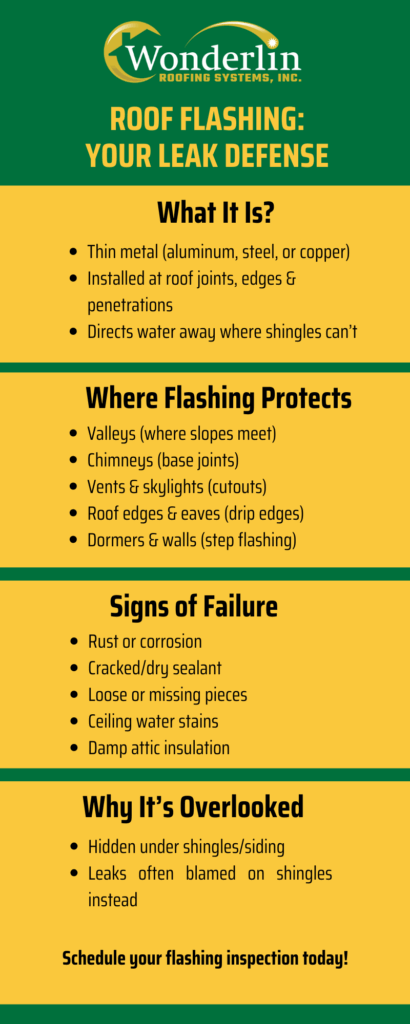
Roof flashing is a thin, durable material, usually metal like aluminum, galvanized steel, or copper, installed at joints, edges, and penetrations on your roof. Its purpose is simple: to direct water away from areas where shingles alone can’t keep moisture out.
Think of flashing as your roof’s raincoat seams. Without it, water sneaks into the cracks, and leaks spread.
Key benefits of roof flashing:
- Prevents leaks at joints and intersections
- Extends the life of your roof system
- Protects against costly water damage in walls, ceilings, and insulation
Where Roof Flashing Protects Your Home
Flashing is tucked into all the “weak spots” where water loves to find its way. Here’s where you’ll see it:
- Valleys: Where two roof slopes meet. Without flashing, water would pool and seep in.
- Chimneys: Flashing is layered around the base to stop leaks where brick meets shingles.
- Vents & Skylights: Any hole cut into your roof needs flashing to keep it watertight.
- Roof edges & eaves: Drip edge flashing keeps water from curling under shingles.
- Dormers & walls: Step flashing helps where roof planes meet vertical walls.
Tip: These are also the areas most prone to failure. Keeping them on your seasonal inspection checklist empowers you to avoid potential issues. Look for signs of rust, cracks, or loose pieces; if you spot any, it’s time to call a professional.
Common Damage & Signs of Failure
Flashing isn’t invincible. Over time, it can deteriorate, corrode, or simply pull away from its seal. Once that happens, water has a straight path into your home.
Watch for these red flags:
- Rust or corrosion on metal flashing
- Cracks or dried-out sealant
- Loose or missing flashing pieces
- Water stains on ceilings or attic rafters
- Damp insulation near chimneys or vents
Left unchecked, a small gap can lead to mold growth, drywall damage, or even structural wood rot. That’s why flashing issues often become some of the most expensive repair calls. Addressing these issues promptly can save you from costly repairs and protect the structural integrity of your home.
Why Homeowners Often Overlook Flashing
Flashing is usually hidden under shingles or siding, making it easy to forget until a leak occurs inside your home. Many homeowners assume a roof leak means “bad shingles,” but the truth is, most of the time, it’s failing flashing.
That’s why regular roof inspections are necessary. A professional eye can spot problems before they become major, giving you proactive control over your home’s maintenance.
Call to Action: Schedule a Flashing Inspection
If you’ve noticed stains on your ceiling, rust around your chimney, or just haven’t had your roof looked at in years, now’s the time. Flashing problems are easiest (and cheapest) to fix early.
Schedule a roof repair today.
Learn more about our full range of roofing services.
Read our homeowner’s guide: Protect What Matters Most.
Your home deserves more than guesswork. Let us give you peace of mind with a flashing inspection that protects your roof and everything beneath it, ensuring you feel reassured and secure about your home’s condition.
FAQs About Roof Flashing
How long does roof flashing last?
Most metal flashing lasts 20–30 years, but sealants may fail sooner. That’s why inspections every few years are crucial.
Can flashing be repaired, or does it need replacement?
In some cases, flashing can be resealed or patched. But replacement is the safest route if it’s rusted, bent, or missing.
Do all roofs need flashing?
Yes. Any roof with intersections, penetrations, or edges (nearly every roof) needs flashing. Without it, leaks are inevitable. Flashing is not optional but a crucial part of your roof system against water infiltration.